Energy rates are back in the headlines. After years of relatively modest growth, electricity prices have increased sharply in many parts of the country.
As energy demand continues to rise, driven in part by new data centers built to support the growth of artificial intelligence, both homes and businesses are feeling the pressure of higher utility bills.
For commercial customers, those increases are bringing renewed attention to energy-saving projects. One of the most familiar options, lighting upgrades, is once again becoming a way for businesses to help offset rising operating costs.
Commercial Electric Rates Are Rising, and Businesses Are Feeling It
According to data from the U.S. Energy Information Administration, the average commercial electricity rate has increased by 35% since 2020. But that national average only tells part of the story. In some states, commercial electric rates have increased much more dramatically.
Top Commercial Electric Rate Increases Since 2020
| State | Increase Since 2020 |
|---|---|
| Maine | 97% |
| District of Columbia | 92% |
| California | 87% |
| Maryland | 67% |
| New York | 66% |
| Pennsylvania | 63% |
| Massachusetts | 54% |
| Rhode Island | 51% |
| Louisiana | 49% |
| Delaware | 47% |
For businesses in these areas, rising electric rates are having a real impact on operating costs, especially for facilities with long operating hours, large square footage, or energy-intensive equipment.
Small businesses are already feeling the pressure. A 2026 survey from the National Federation of Independent Business found that 42% of small business owners said their energy costs had increased significantly over the previous three years, while another 37% said they had increased moderately. To offset those higher costs, respondents said they had to absorb the hit, pass it on to customers, or invest in energy-saving upgrades.
For many commercial customers, energy efficiency is not just about being “green” at this point. It is a way to control operating costs.
Lighting Upgrades Become More Valuable as Rates Rise
For years, lighting was the first place businesses looked to reduce energy costs. Moving from T12 fluorescent and HID lighting to more efficient technologies could dramatically cut electricity consumption, often with payback periods measured in months rather than years. As those upgrades became widespread, the focus naturally shifted to other energy-saving measures.
But rising electric rates are changing the conversation. The amount of energy saved by a lighting upgrade may be the same as it was a few years ago, but the value of those savings has increased significantly. The project did not change, but the value of the savings did.
For example, consider a warehouse running a two-shift operation that has been holding off on replacing its aging 400W metal halide high bays. If the facility upgrades to a 195W LED high bay, it would save approximately 1,082 kWh per year per fixture.
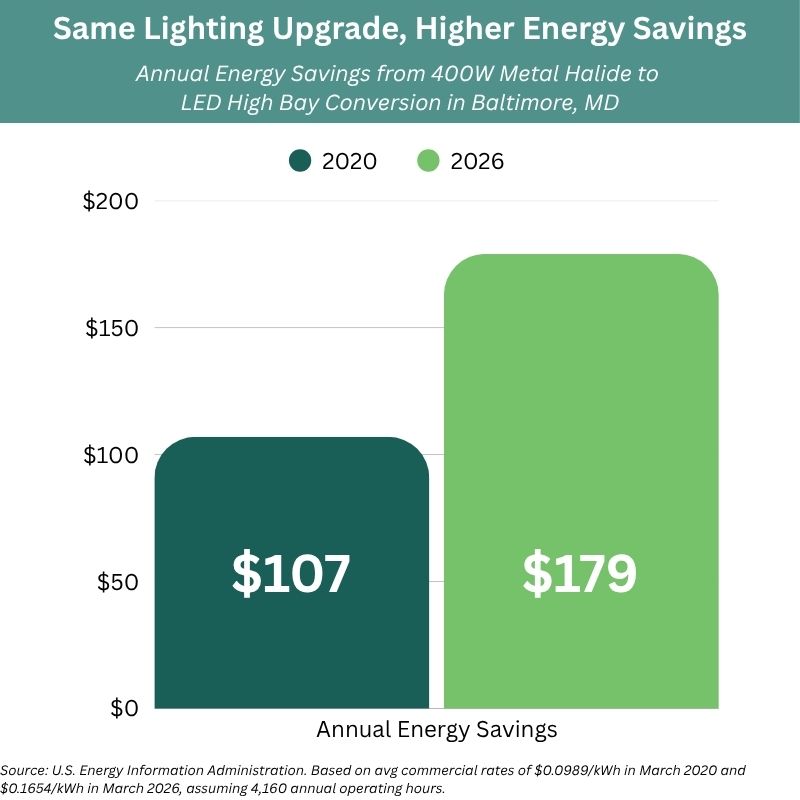
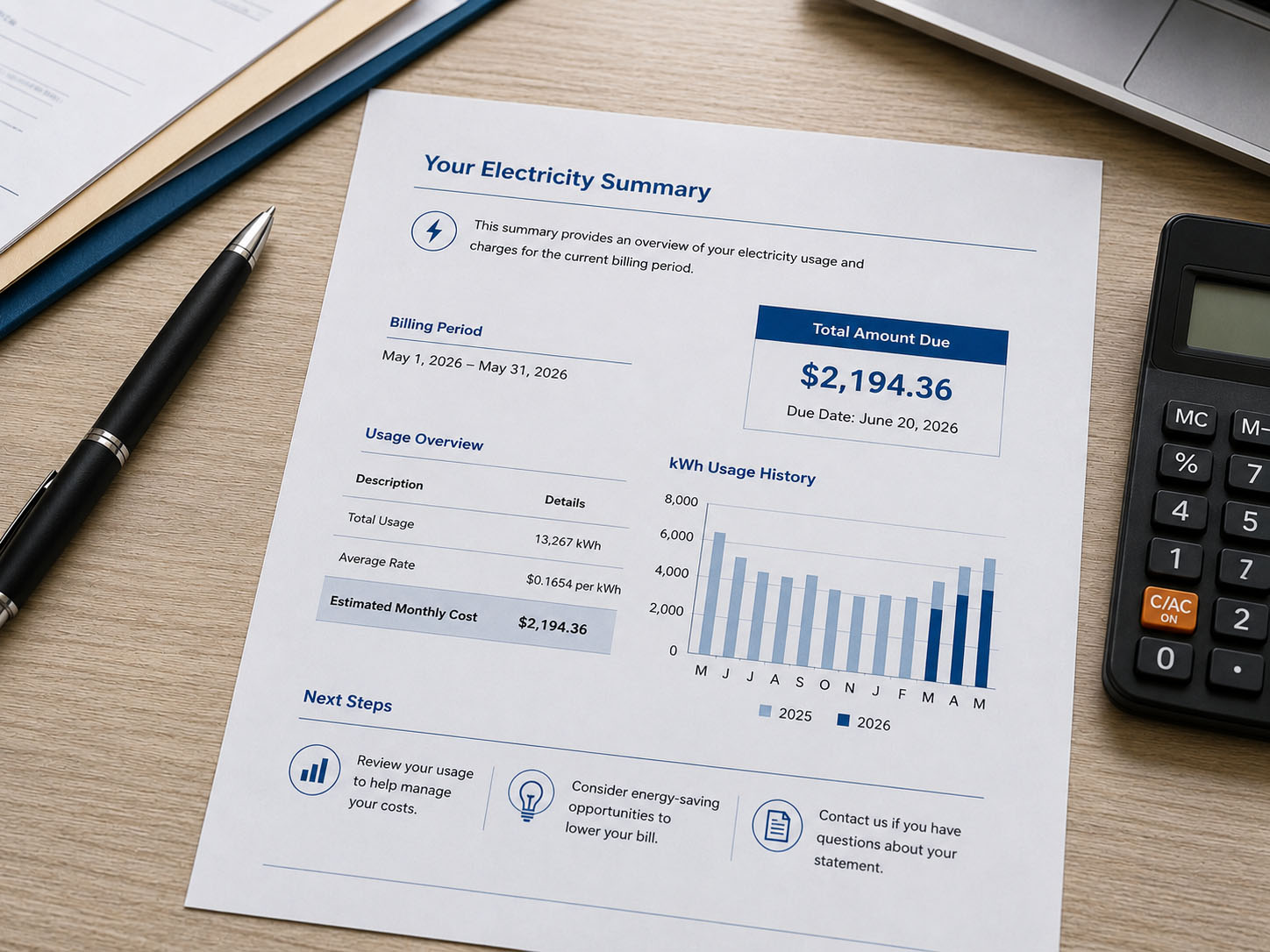
At BGE’s March 2020 commercial electric rate, that fixture would have saved about $107 per year. At the March 2026 rate of $0.1654/kWh, the same fixture would save about $179 in energy costs per year, a 67% increase in annual savings.
That means projects that may not have met a customer’s payback requirements a few years ago could make financial sense today, especially in higher-rate markets such as New England, New York, New Jersey, Maryland, California, and other areas that have seen large increases in electricity prices.
Commercial Lighting Rebates Are Still Widely Available
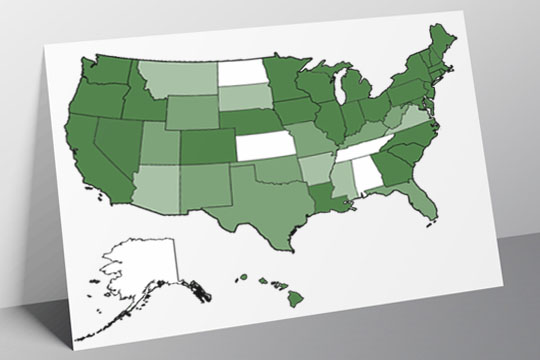
Support for commercial lighting rebates remains strong and help make an even stronger case for lighting upgrades. Currently, 75% of the U.S. has access to an active commercial lighting rebate program. While some programs have phased out basic lighting incentives in favor of more comprehensive projects, most of the country still offers rebates for commercial lighting upgrades.
And it is not just availability that makes rebates important. Rebate amounts have also increased and, in some cases, are at record levels. In 2026, the average prescriptive lighting incentive increased by 17% across all categories. The largest gains were seen in upgrades that replaced legacy HID lighting, which makes these projects even more attractive when combined with the energy savings from higher electricity rates.


For example, the average rebate for a high bay replacement is $146, while the average rebate for an LED pole light used in parking lots is $154. When combined with the energy savings, these incentives can help bring paybacks down to months rather than years.
Higher electricity rates increase the value of energy savings, while rebates reduce the project's upfront cost. Together, they can help shorten the payback period and make projects easier for customers to approve.
LED-to-LED and Lighting Controls Gain Focus
Rebate programs have also started adapting to the changing lighting marketplace as the installed base of efficient lighting has increased over the years. To achieve deeper energy savings, many programs are placing greater focus on LED-to-LED upgrades and lighting controls.
LED-to-LED upgrades apply to customers who installed early-generation LED systems years ago. Many of those systems are now approaching end of life, and customers may be deciding whether to replace them with newer LED technology.

Today’s LED products are often much more efficient than earlier generations. Field-adjustable fixtures can also help customers right-size their lighting. In some facilities, spaces may have been overlit because of a one-size-fits-all approach. Adjustable light output allows customers to further reduce wattage while maintaining appropriate light levels.
In 2026, 22% more programs explicitly allow rebates for LED-to-LED upgrades. These incentives are still limited, but they are becoming more common, especially in programs that calculate incentives based on watts saved.
Lighting controls can also increase energy savings beyond a basic fixture replacement. Basic occupancy or vacancy sensors help reduce unnecessary operating hours, while more advanced systems, such as Luminaire Level Lighting Controls and Networked Lighting Controls, can adjust lighting based on occupancy, schedules, daylight availability, and user needs.
Rebate programs are taking that into account as well. Incentives for traditional lighting controls increased by 12% to 20% this year, depending on the measure. More than 200 programs now offer dedicated NLC rebates, a 7% increase over last year.
Use Energy Rates and Rebates to Start the Conversation
For contractors and distributors selling lighting upgrades, rising electric rates create a stronger reason to revisit energy-saving projects. While large, nationwide retrofit projects may be less common than they were during the first wave of LED adoption, retrofit opportunities still exist.
That is especially important because the pockets of activity in the lighting market appear to be concentrated in the types of projects where rebates and higher energy savings can still help move customers forward. The Q1 2026 Pulse of Lighting report, which gathered input from more than 200 distributors, manufacturer reps, lighting agents, and manufacturers, found that the overall market remains challenged, but “decent” activity is concentrated in small and midsized projects, primarily retrofit work rather than new construction. The report also noted that some distributors are pursuing retrofits of first-generation LED installations.
Rebates are key to making progress in these markets. Energy savings may be the main message, but adding the rebate can significantly improve the payback and help customers overcome objections.
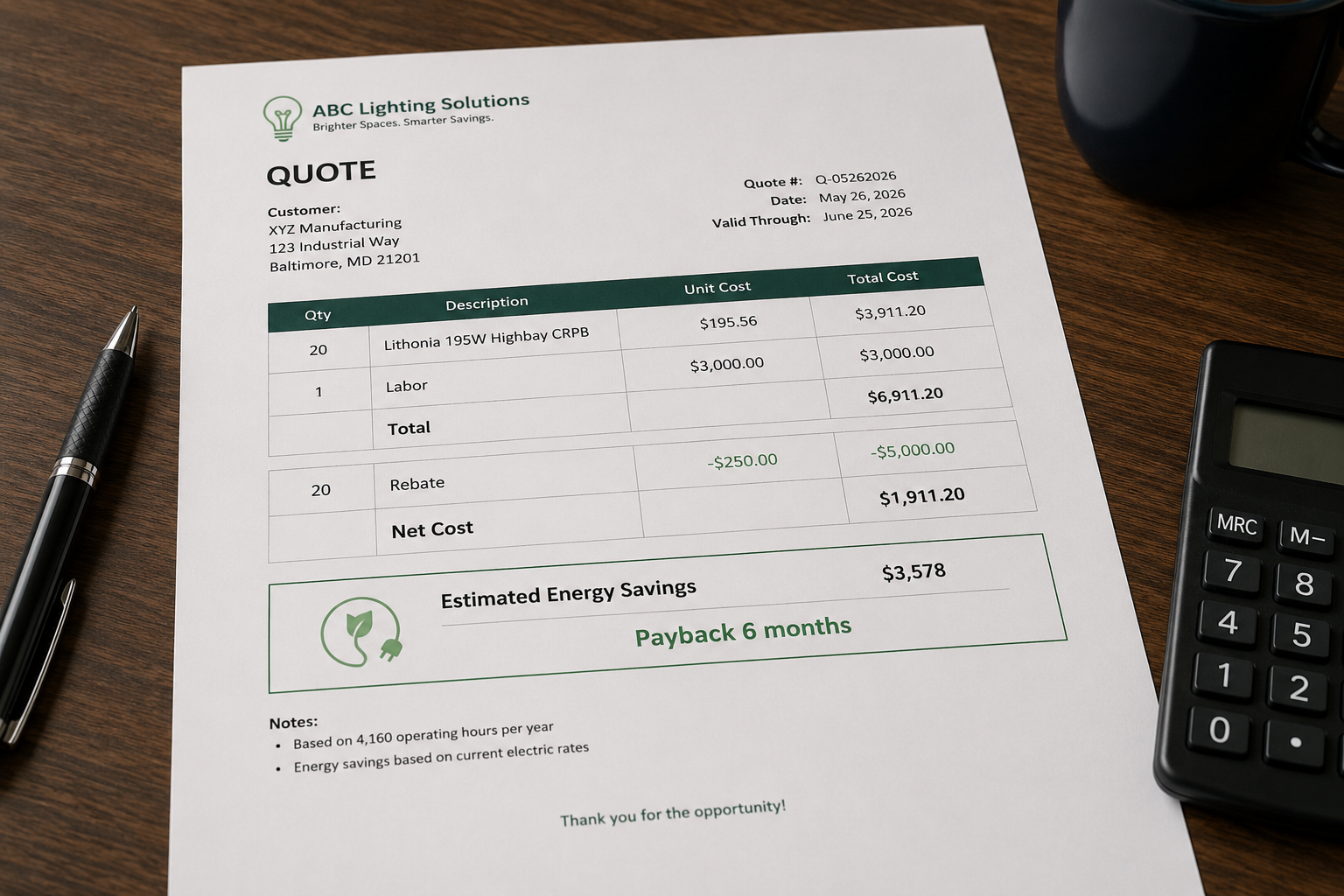
Take the high bay example in BGE territory discussed earlier. The energy savings of $179 per year is already a strong story, bringing the payback to roughly 23 months. But when the $250 utility rebate is factored in, the payback drops to just over six months. That is much harder for a customer to argue with.
Because of that, every quote should include the available rebate, estimated annual energy savings, and projected payback period. This is especially important in high-rate areas, where the same kWh savings can be worth significantly more than it did just a few years ago.
Easily Find the Highest Lighting Rebates in North America
For those looking to identify the best opportunities, having access to accurate and up-to-date rebate information is critical. RebatePro for Lighting helps contractors and distributors find available rebates, estimate incentives for specific projects, and stay current as programs continue to change across the U.S. and Canada.
Learn more about RebatePro for Lighting